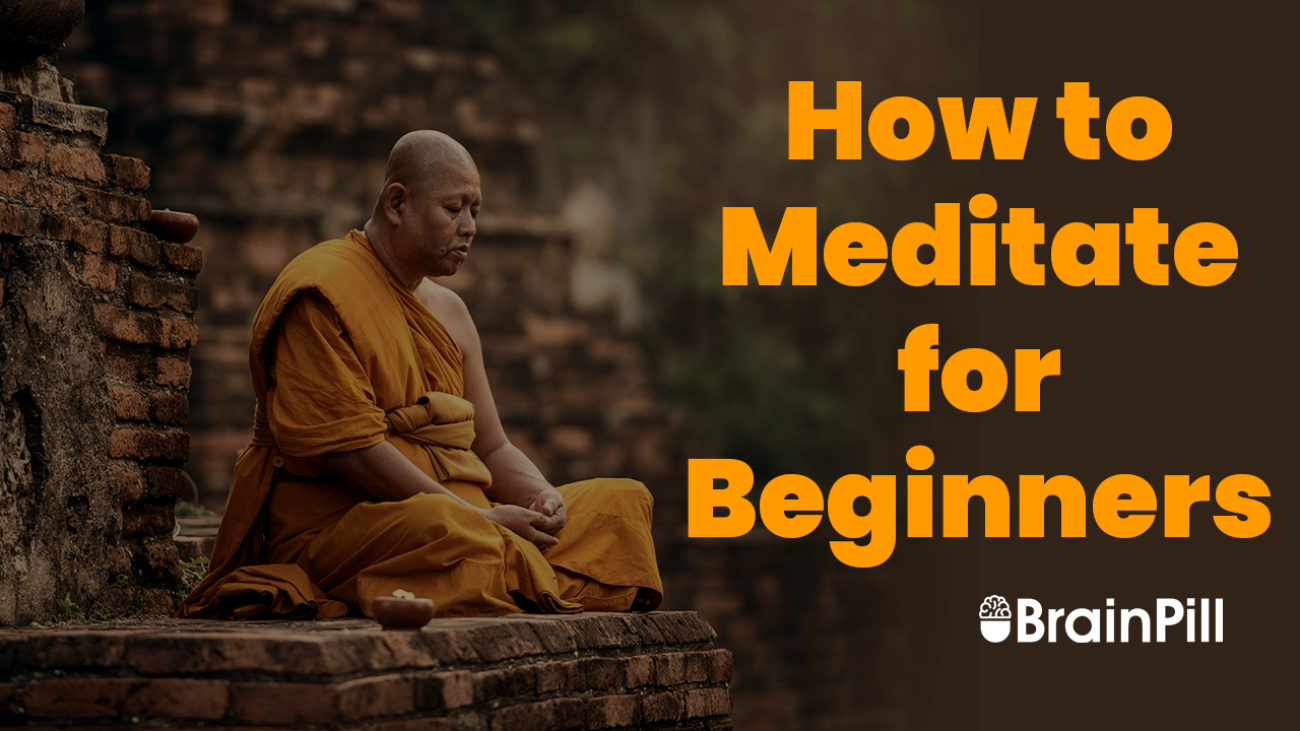
thumbnail

HOW TO MEDITATE FOR BEGINNERS

Today we’ll go over exactly how to meditate if you are a beginner. I’ll go over everything from where to meditate to what you should do with your body and mind and how long you should do it. So you can begin reaping some of these advantages. All of the information I’m giving you today is from a book called “mindfulness in plain English,” which is recommended by almost every meditation form on the internet.


Where should I practice meditation? In theory, you can meditate anywhere you’d like because it’s a mental workout. You can meditate in a chair, on the floor, or even while lying in bed. There is, however, an ideal way to meditate. It is best to avoid meditating in bed because you will most likely fall asleep. Meditation on the floor with your back straight up is considered the most formal and beneficial method. This is because it keeps you awake and allows you to sit for long periods.


What am I going to do with my body? When meditating, the first thing to keep in mind is your feet. Many experienced meditators will tell you that your feet should be on top of each other. However, for most beginners, having them crisscrossed on top of each other like a pretzel, your arms resting on your thighs, and your hands resting on top of each other and forming a cup shape is perfectly fine. It’s up to you whether your thumbs touch. What matters is that your arms are relaxed. Your spine is straight, and your head is perfectly level. Your head is not tilted up or down, only forward. Regarding what to do with your eyes, you can meditate with your eyes open or closed. However, I recommend closing your eyes and meditating for most beginners. Because it is easier to concentrate. If you meditate with your eyes open, avoid focusing on anything in front of you. Instead, cast your gaze into the distance.


For how long should I meditate? Before you begin your meditation session, you should set the alarm. This is because time feels much slower when you first begin meditating. Setting the alarm eliminates the need to constantly wonder how much time is left in the session. For first-time meditators, I recommend starting with just five minutes. You can increase the time as you make meditation a daily practice and become more accustomed to sitting in the meditative position for long periods of time. Most people suggest meditating for 10 to 20 minutes.


What should you do during meditation? This is where things get complicated. There are numerous types of meditation available today. Some people are preoccupied with their surroundings. Some involve mentally reciting words. One of the most commonly taught forms of meditation is the one you’ll be learning today. It’s known as mindfulness breathing meditation. It’s very simple to learn and is thought to be as powerful and insightful as any other type of meditation. The focus of breathing meditation is, as you might expect, on your breath. To begin, make sure you’re breathing through your nose. Then all you have to do is concentrate entirely on your breathing. Take note of how the air feels as it passes through your nostrils. Examine how your breath changes from inhale to exhale. Take note of the brief pause between those two actions. Take note of every aspect of how it feels. Do not pass judgment or criticism on it. Simply watch. You’ll quickly notice that thoughts will begin to appear in your mind, distracting you from this simple task. “What should I make for dinner? Perhaps I should order takeout instead. Wait, you’re attempting to lose weight. So, should I or shouldn’t I?” When you notice your mind wandering this way, simply bring it back to the breath. This is how you practice mindfulness. Most people who meditate for the first time find it extremely difficult to focus solely on their breath for even a few seconds. They’ll frequently become lost in thought. This is completely normal. So don’t be too hard on yourself if it happens. Which it most likely will. All you have to do is return your attention to your breathing.


A good trick I use to quickly regain focus is to focus all of my attention on the small bridge between inhale and exhale. That brief pause during which your body transitions during the act of breathing. While meditating, try to avoid moving as much as possible. Itches and urges to fidget will arise throughout your meditation session. This is typical. This is understandable. Simply return your attention to your breathing, and the sensation will pass. And that’s the end of it. It’s a straightforward exercise. What matters is how frequently you work on it and how much time you devote to it by making it a habit. You’ll notice that you can concentrate entirely on your breathing for longer and longer periods of time. Consider this to be your mindfulness muscle strengthening.


How frequently should I meditate? To truly begin reaping the benefits of meditation? You should meditate every day. My routine is 10 minutes every day when I wake up; some people like to do it twice a day, such as Arnold Schwarzenegger, who does it 20 minutes when he wakes up and 20 minutes before he goes to bed. The most important factor is that it becomes a daily habit for you.


When will I start seeing results? First and foremost, you must do it on a daily basis. The length of each session also influences how quickly you see results. But, in the end, it’s difficult to say because it varies so much from person to person. Because of their upbringing, some people are less mindful in general. As a result, it will take them a little longer to see the benefits. In my personal experience, it took me about a month of daily meditation to notice any benefit. Overall, I found myself in a better mood and less likely to be consumed by certain negative emotions. As I continued to practice, I noticed more and more advantages along the line.


That’s all there is to meditation, guys. It’s simply the act of making it a daily habit. That is difficult. If you have any further questions, please leave them in the comments section below, and I’ll try to answer as many as possible.


Layer-13

4 Daily HABITS That will Help you Dominate 2023

We live in an era where food that used to take hours to obtain can now be delivered to your door in less than 30 minutes. Never before in human history have we had so much free time on our hands as we do now. Unfortunately, the majority of us waste it. We turn on the television or our gaming console. We medicate ourselves with weed, alcohol, drugs, and pornography to pass the time. What a colossal waste. What exactly should you be doing with all of your free time? So, if you’re even a bit serious about becoming a winner in life, here are the four most important things you should focus on.

Number one, exercise. This first task is critical because, with so much free time on our hands, we need to be active during this time. We used to move around and lift things a few centuries ago. Whether tending to the farms or making tools in the workshop, almost all our jobs required us to work out our bodies. However, the majority of us now work behind computer screens and registers. We are not getting the necessary amount of exercise for our bodies to function properly. Studies have shown that people who exercise have more energy throughout the day. If you lack energy, you will spend most of your free time doing things like Netflix and gaming. Starting with a simple workout program like starting strength will get you started on improving your fitness and gaining more energy throughout the day.

Number two, reading. I know you’ve probably heard this advice a hundred times before, but bear with me. What you’re learning in school is out of date. Most of what you’re learning there will be useless once you graduate. This means that most people have no idea what they’re doing. Real-life skills such as managing finances, social skills, dating, diet, and fitness are virtually non-existent among the general population. And this, in my opinion, is a very good thing for you. This means you’ll easily rise to the top because your competition stinks. A well-known entrepreneur once stated that you could become an expert in any field by reading only three books on the subject. You could learn more about any subject than 99% of the population by simply reading three books. Look, if you want to succeed in life, you must first read the instruction manual. Concentrate your reading on self-development books because they provide practical knowledge that can be applied in everyday situations.

Number three, meditation. Meditation is one of those things that has been proven to be extremely beneficial a hundred times over. But no one does it. Why? On the surface, it’s probably one of the most tedious tasks available. You just sit there and do nothing, right? There’s a lot more to it than that. You are actually training your brain when you meditate. You learn to control which thoughts you focus on and which you ignore. This is a critical skill for becoming a happier person. You will also have significantly more mental energy throughout the day. It’s so important, in fact, that if you asked me which one habit could change your life, I’d say meditation. Just ten minutes of meditation a day is more than enough to reap the benefits. You can check out my video down in the description on how to meditate.

Number four, hobby or passion. I firmly believe that everyone has a passion that brings out their inner child. It’s something that makes you feel a little giddy. Instead of dreading the time spent on it, you become immersed in it. This is the last task because the other three will supplement your ability to work on your hobby or passion. Reading provides you with the knowledge you need to advance in your hobby. Meditation clears your mind for creativity, and exercise gives your body the energy to focus on this hobby even after a long day at work. This hobby is your source of fulfillment, whether it’s dance, art, writing, or starting your own Make a Wish Foundation. You will not feel complete without it. You will feel as if something is missing from your life. And it is my firm belief that if you devote enough time and effort to your hobby, it can eventually become a source of income. Once you reach this point, your life will shift from one of dread to one of excitement.

That’s it, guys. These four tasks are, in my opinion, the four most important things you should prioritize in your spare time. Check out my channel brain pill for more in-depth videos if you want a more detailed breakdown of any of these.

Layer 8

9 Reasons Why Highly Intelligent People Prefer To Be Alone

Do you frequently prefer staying at home to going out with friends? If you responded yes, I believe it is reasonable to assume that you prefer to accomplish things alone rather than with others. While many individuals appreciate relationships, friendships, and spending time with people they care about, research shows that those with higher IQs are happy with less social involvement. There are various reasons for this, and in this video, we’ll look at nine of the most common reasons why highly bright people prefer to be alone.

Number 1 – They Value Productivity

People normally function successfully in groups because their collective strengths may compensate for their individual deficiencies. However, it can be irritating for brilliant individuals because everyone else is nitpicking on minute issues while they are way ahead of the pack, looking at the broad picture. Intelligent people frequently opt to work alone not because they dislike company but because they believe they will be more efficient.

Number 2 – They Often Have A Different Perspective

Intelligent people spend a lot of time contemplating and observing because intelligence and curiosity go hand in hand. This enables individuals to obtain greater knowledge and viewpoints than those around them. Because of their distinct senses and ability to spot subtle patterns, they frequently reveal answers that others could overlook and solutions that most would miss. That explains why folks who think differently are more likely to be outstanding inventors and creative geniuses.

Number 3 – They Are Comfortable Being Different

Some may label them as loners, eccentric, or unusual. Yet, these individuals are perfectly at ease with themselves and their way of thinking. Their diverse personalities and mental patterns help them achieve their objectives. Intelligent people thrive in solitude and take solace in the stillness since they have no one to answer to.

Number 4 – Solitude Helps Them Appreciate Others More

The fact that highly bright people seek solitude does not imply that they are all hermits. The vast majority of them, in reality, truly care about others and are among the most compassionate humanitarians. Spending time alone actually allows them to acquire a stronger appreciation for others. They have more quality time to spend with the few close people in their circle because they don’t associate with huge groups on a regular basis. This enables people to connect with others on a deeper level and better understand them.

Number 5 – They Don’t Seek Social Validation

Validation is a basic human drive that exists regardless of intelligence level. Their little group of friends provides all the validation they require. Smart people are usually self-assured enough to disregard negative feedback. They aren’t thirsty for acceptance and don’t really care whether or not other people like them.

Number 6 – They Spend a Lot of Time Reading

Reading is one of the most effective techniques to improve one’s intellect. It improves vocabulary, verbal abilities, and general understanding. Intelligent people are passionate readers who educate themselves by reading all they can get their hands on! They are interested in learning about people, cultures, animals, history, and the world in general. And because reading demands peace and quiet, they can’t do it when they’re around other people. As a result, people frequently seek out a quiet place to read.

Number 7 – They’re Not Afraid of Missing Out

The disturbing feeling of concern that an exciting or interesting event is currently taking place elsewhere is referred to as the fear of missing out. Of course, anyone can be affected by this. Intelligent individuals, on the other hand, attempt to find purpose in what they are doing right now. As a result, they feel more fulfilled and satisfied. They simply opt to enjoy the present moment rather than be concerned about missing out on something else.

Number 8 – They Often Have Different Schedules

Intelligent people are more prone than less intelligent people to have varied sleep cycles. According to research, there is a high association between IQ and bedtime. In general, the later you stay awake, the higher your IQ. This suggests that intelligent individuals are night owls who prefer to work at night and sleep during the day. They typically peak later in the evening, giving them a surge of energy to devote to creative undertakings, creativity, and imagination. As a result, their schedules do not always coincide with the schedules of others, leaving them with less opportunity to mingle.

Number 9 – They Need More Quiet Time for Decisions

Intelligent people understand that many decisions require serious thought, and they prefer to have some room to do so. As a result, they frequently request additional time to consider the case before answering. They tend to gather as much information as possible and analyse things from every viewpoint before reaching a judgment.

There you have it.

While interpersonal interaction is meant to make individuals happier, bright people appear to prefer solitude. Do you like spending more time alone? What are your thoughts on this list? Do you concur? Please leave your views and comments in the section below. If you loved this video, please give it a thumbs up and share it with your friends so that we can continue making them. For more videos like this, subscribe and remember to turn on the notification bell.

Also, be sure to check out our other videos as well.

Layer 6

15 psychological facts that will blow your mind

Psychology is the study of the mind and behavior research, which has been going on for decades and will continue in the future, to try to understand why we are the way we are. Every day, we learn more and more, but there’s still so much we don’t understand. Some of the research findings are more intriguing than others. Did you know that using punctuation in your text messages makes you appear untrustworthy?

Buckle up, because you’re about to embark on a wild psychological journey. Some of the traits you notice in yourself or others may be explained or confirmed by the following college facts.

Number one.

If we have a backup strategy in place, our primary strategy is more likely to fail. Scientists at the University of Pennsylvania studied how volunteers performed on a task and discovered that those who thought about a backup plan did worse than those who didn’t. They also discovered that participants got less driven when they realized they had other possibilities. Victor H Room’s expectation theory, which he developed in 1964, is linked to this. According to the expectancy theory, your motivation for something is determined by whether or not you expect to succeed. A backup plan is built on the assumption that you won’t succeed the first time. Researchers feel it’s important to prepare ahead, but not to get too caught up in the details. Without even realizing it, you might be sabotaging your own success.

Number two.

‘Catching’ a yawn can be an effective method for us to communicate. You’re excited to get started because the workday has only just begun. You’re sitting at your desk during your morning meeting when the guy next to you lets out a large, loud, unpleasant yawn. Before you know it, you’re yawning and you’re not even tired. That’s a response yawn. There are several theories on why yawns are contagious. One of the leading ones being response yawns demonstrate empathy. This explains why autistic children and early infants who haven’t yet learnt empathy are less likely to response yawn.

Number three.

We are more concerned about a single person than we are about large-scale disasters. Researchers at the University of Pennsylvania looked at people’s behavior in one study. When it came to contributing to charities based on various cues, one group was shown a malnourished young child while a statistic concerning millions of people dying of hunger was given to the second group.   The third group was taught about both. Those individuals who just heard about the statistic gave the least, followed by those who heard both. Those who learned about the young child gave twice as much as the statistic group. This is due to the fact that when an issue feels too enormous, we feel helpless and inadequate, according to psychologists. Like our efforts won’t have any payoff. In this case, helping save one starving girl seems more attainable than ending world hunger.

Number four.

The beginnings and ends of sentences are simpler to recall than the middle. Have you ever gone grocery shopping only to find you forgot to bring your shopping list with you? When trying to recollect information without it, you can picture it and remember things around the beginning and end, but the middle information is hazy. This is backed up by cutting-edge studies on human neurology. The serial position effect is the name for this phenomenon. This is also why you may remember the end but not the middle of your manager’s presentation. So it’s a thing, and it’s possible that you don’t have ADHD after all.

Number five.

It takes five good things to offset one negative. You may have heard that focusing on a few things you are thankful for will help you start and end your day. This helps us keep balanced since we have a negativity bias which drives us to focus on the negative rather than the positive. It’s foolish to be fixated on the negative parts of your life rather than the positive. Aim for a five-to-one ratio of good to bad in your life. You just might, manifests something incredible.

Number six.

When food is prepared by someone else, it tastes better. Have you ever wondered why food always tastes better when it’s prepared by your mother? In reality, food tastes better when it’s prepared by someone else, presuming they’re a competent cook. This is due to the fact that by the time you’re ready to eat, you’ve spent so much time preparing a meal for yourself that it’s no longer interesting. As a result, you are less likely to like it.

Number seven.

We’d rather know something unpleasant is on the way than have no idea what to anticipate. When someone says, “We need to talk,” do you get a sinking feeling in your stomach? Your mind is suddenly flooded with a million diverse, negative possibilities. If it’s a romantic relationship, you’d probably prefer if they broke up with you right away. If it’s your boss, you’d want to be fired right away. Researchers have discovered that knowing something unpleasant is likely to happen is preferable than uncertainty. This is because our brain goes into overdrive when we don’t know what to expect and tries to forecast all possible outcomes, both good and negative.

Number eight.

When one rule appears to be too harsh, we feel compelled to break several. In the psychological phenomena called reactants, people prefer to break more laws when they believe that particular freedoms are being restricted in order to reclaim the freedom that they believe is being taken away. When grounded, teenagers may not only sneak away, but they may also engage in other harmful behaviors as a type of reactance.

Number nine.

There’s a reason we want to squeeze cute objects, puppies, and infants. Don’t you simply want to love them, squeeze them, and cuddle with them? While this appears to be a natural behavior, it is known as cute aggressiveness. According to an article published in Frontiers and Behavioral Neuroscience. The notion behind cute aggression is that when we are filled with good sensations, such as those prompted by a gorgeous puppy or new-born, a small bit of hostility balances out those overpowering feelings so that we do not injure innocent little things.

Number Ten.

We unconsciously believe what we want to believe. The tendency to interpret facts in a way that confirms what we already believe is known as confirmation bias. This explains why some people favor certain news outlets over others. Forget about convincing Uncle Fred to change his mind about foreign relations. This confirmation bias not only encourages us to seek out information that confirms our existing beliefs, but it also causes us to dismiss contrary information.

Number Eleven.

You’re hardwired to most prefer the music you listened to in high school. Dopamine and other feel-good chemicals are released as a result of listening to good music. Between the ages of 12 and 22, everything, including music, feels extremely important. Despite the passage of time, studies reveal that we relate to the music we connected to as teenagers more than we do as adults.

Number Twelve.

Memories are more like jigsaw puzzles than precise photographs. False memories are things that you recall in your mind but aren’t actually true, either entirely or partially. As an example, you may believe you ran the dishwasher before leaving for work when, in fact, you did not. This is because our brains might occasionally fill in the blanks incorrectly when it barely remember the gist of what happened.

Number Thurteen.

We look for human faces, even in inanimate objects. The tendency to detect distinct, often meaningful images, such as faces, in random or ambiguous visual patterns is known as pareidolia. The men on the moon are a well-known example. Some experts relate it to the fact that recognizing faces is so crucial to us as social creatures that we’d rather fabricate one when one doesn’t exist than miss a real one that does.

Number Fourteen.

People rise to our high aspirations and do not rise to our low expectations. The Pygmalion effect is a psychological phenomena in which having high expectations leads to higher performance. In a well-known study conducted in the 1960s, researchers informed teachers that random children had a high potential based on their IQ test scores. They discovered that pupils labeled as high potential ended up becoming high achievers, at least in part due to their teacher’s increased expectations.


Number Fifteen

Our brain does not put a high priority on long-term deadlines. Yes, you could definitely start on that major project for work or school right now, but you’ve got a few months. and before you know it, those months are gone, and you’re scrambling to squeeze months’ worth of work into a few days. Tasks that are urgent but inconsequential are more enticing. They provide rapid gratification because they are quicker and easier to do. Our brains process  Short-term deadlines, such as those measured in days, are preferable than long-term ones, such as those defined in months or years.

If you liked this video, please give it a thumbs up and share it with your friends so that we may continue to make them. For more videos like this, remember to press the subscribe button on the notification bell. Also, be sure to check out our other videos as well. Thanks for watching.

Layer 18

Manifestation Affirmations: Attracting Your Desires and Creating Positive Change

Introduction

Manifestation is the process of bringing your desires and dreams into reality by harnessing the power of your thoughts and beliefs. It involves using affirmations, which are positive statements that can transform your mindset and attract positive changes into your life. In this article, we will explore the concept of manifestation affirmations and how they can help you manifest your dreams, whether it’s money, a dream job, or love. By understanding the power of affirmations and incorporating them into your daily life, you can align yourself with the energy of abundance and create the life you desire.

Understanding Affirmations and Their Impact

Affirmations serve as powerful tools that can shape your mindset, attitude, and actions. By repeating positive statements, you can reprogram your subconscious mind and attract opportunities and experiences that align with your desires. Affirmations work by activating the law of attraction, which states that like attracts like. When you focus on positive thoughts and beliefs, you attract positive outcomes and experiences into your life.

The key to using affirmations effectively is to repeat them with intention, belief, and certainty. By doing so, you create a positive energy that aligns with your desires and helps manifest them. It is important to maintain a positive mindset and avoid doubts, limiting beliefs, and negative thoughts that can hinder the manifestation process. Consistency and persistence are crucial to reinforce the positive energy and manifest your desires.

Watch This Video About Wealth DNA Code at the Official Website 

Manifestation Affirmations for Attracting Your Dreams

Affirmations for Manifesting Your Dreams

  1. I effortlessly manifest my dreams into reality.
  2. I am a powerful creator, and my dreams are coming true.
  3. The universe supports me in manifesting my desires.
  4. I am open to receiving all the abundance and opportunities that come my way.
  5. Every day, I move closer to achieving my dreams.
  6. I deserve to live a life filled with joy, abundance, and fulfillment.
  7. My dreams are unfolding perfectly, and I trust the process.
  8. I am aligned with my purpose, and success follows me.
  9. I am worthy of all the blessings and abundance life has to offer.
  10. I am grateful for the manifestation of my dreams.

Affirmations for Manifesting Money

  1. Money flows into my life effortlessly and abundantly.
  2. I am a magnet for financial prosperity and abundance.
  3. I deserve to have a wealthy and abundant life.
  4. I attract lucrative opportunities that bring me financial success.
  5. Money is a positive force in my life, and I use it to create positive change.
  6. I am open to receiving unexpected financial blessings.
  7. Financial abundance is my birthright, and I claim it now.
  8. I release all limiting beliefs about money and embrace my ability to attract wealth.
  9. I am a money magnet, and opportunities to increase my wealth are always present.
  10. I am grateful for the abundance of money that flows into my life.

Affirmations for Manifesting Your Dream Job

  1. I am attracting my dream job with ease and confidence.
  2. The perfect job opportunity is manifesting for me right now.
  3. I am worthy of a fulfilling and rewarding career.
  4. I attract job offers that align with my skills, passions, and values.
  5. Every day, I take steps towards securing my dream job.
  6. The universe is guiding me towards the ideal job that brings me joy and fulfillment.
  7. I have the qualifications and abilities to excel in my dream job.
  8. I radiate positive energy and attract positive career opportunities.
  9. I am confident in my abilities and trust that the right job will come to me.
  10. I am grateful for the manifestation of my dream job.

Affirmations for Manifesting Love

  1. Love flows easily and effortlessly into my life.
  2. I am attracting a loving and supportive partner.
  3. I am worthy of a healthy and fulfilling romantic relationship.
  4. I radiate love and attract loving people into my life.
  5. The universe is bringing me the perfect partner who complements and supports me.
  6. I am open to giving and receiving love in its purest form.
  7. My heart is ready for a deep and meaningful connection.
  8. I attract a partner who loves and accepts me unconditionally.
  9. I am deserving of a loving and harmonious relationship.
  10. Love surrounds me, and I am grateful for the manifestation of love in my life.

Conclusion

Manifestation affirmations are powerful tools that can help you attract your desires, whether it’s money, a dream job, or love. By using positive statements and repeating them with intention and belief, you can shift your mindset and align yourself with the energy of abundance. Consistency, persistence, and a positive mindset are key to manifesting your dreams. Remember to maintain a grateful attitude and trust in the process. By incorporating manifestation affirmations into your daily life, you can create positive change and attract the life you desire.

Additional Information: Incorporate visualization techniques along with affirmations to enhance the manifestation process. Visualize yourself already living your dreams and experiencing the emotions associated with achieving them.

Remember, manifestation is a journey, and the key is to stay committed, have faith, and take inspired action towards your goals.

Now, it’s time to start affirming, visualizing, and manifesting your dreams into reality!

Manifestation Affirmations

Manifestation Journals

Manifesting: Unlocking the Power of Co-Creation

Manifesting: Unlocking the Power of Co-Creation

Manifestation Journals

Table of Contents

  1. Introduction
  2. Understanding Manifesting
    • What is Manifesting?
    • The Power of Vibrational Match
    • Letting Go of Control
  3. The Key to Successful Manifesting
    • Cultivating the Energy of What You Want
    • The Role of Energy in Manifesting
  4. The Law of Attraction and Manifesting
    • The Connection Between Energy and Experiences
    • The Importance of Alignment
  5. The Do’s and Don’ts of Manifesting
    • Deciding What You Want to Manifest
    • Avoiding Expectations and Attachments
    • Trusting the Universe’s Plan
    • Surrendering and Letting Go
    • Embracing Spiritually Aligned Action
    • Integrating Manifesting into Daily Life
  6. Conclusion

1. Introduction

Manifesting has become a popular concept in recent years, captivating the minds of individuals seeking to create their desired reality. It involves the process of aligning your energy with the Universe to co-create the experiences you desire. The power of manifesting lies in understanding the principles behind it and implementing the right practices. In this article, we will explore the key elements of manifesting and provide valuable insights into how you can harness this power to manifest your dreams.

Watch This Video About Wealth DNA Code at the Official Website 

2. Understanding Manifesting

What is Manifesting?

Manifesting is the art of cultivating the experience of what you want to feel and then living and believing in that experience to allow it to come into form. It goes beyond mere wishful thinking and requires you to vibrate at a high frequency, becoming a vibrational match with the Universe. Manifesting can be applied to various aspects of life, including business success, health improvement, relationships, and material possessions. It is essential to stay open to possibilities beyond what you initially think you need, as the Universe has no limits to what it can bring into your life.

“Manifesting isn’t about getting; it’s about allowing.” – Gabby Bernstein

The Power of Vibrational Match

Manifesting operates on the principle of vibrational match. Our energy attracts experiences that align with our energetic frequency. When we vibrate at a low level, we attract low-level circumstances, while a high vibration attracts positive outcomes. This is why it is crucial to pay attention to the energy we emit through our thoughts, feelings, and beliefs. Each thought and feeling sends an energetic message to the Universe, which then responds accordingly. If you want to manifest abundance, for example, it is essential to align your energy with the feeling of abundance rather than focusing on lack.

Letting Go of Control

One of the most significant obstacles to successful manifesting is the need for control. Trying to control every aspect of the manifestation process often leads to feeling stuck, blocked, or powerless. Instead, it is essential to let go and trust in the creative forces of the Universe. Manifesting is not about forcing outcomes; it is about surrendering to the flow of life and taking inspired action. By harnessing the power within you and aligning with the loving energy of the Universe, you become a Super Attractor, effortlessly attracting what you desire.

3. The Key to Successful Manifesting

Cultivating the Energy of What You Want

The #1 key to manifesting is to cultivate the energy of what you want to experience. Manifesting happens on the level of energy, and it is essential to align your energy with the desired experience. It is not enough to create vision boards or repeat affirmations; you must embody the feeling of the manifestation as if it has already come into form. Trust that if you are in the vibration of the manifestation, you are already living it, even if it has not manifested physically. This practice involves designing the feeling and the life you want to experience and taking powerful actions to support your manifestation journey.

The Role of Energy in Manifesting

Energy plays a crucial role in manifesting. Our energy field continuously sends messages to the Universe, which responds in kind. If you consistently feel a sense of lack or deprivation, you are likely to manifest more of the same. On the other hand, aligning your energy with abundance and gratitude attracts more abundance into your life. It is essential to understand that manifesting is an ongoing process, whether we are conscious of it or not. By becoming aware of our energy and consciously cultivating positive vibrations, we can manifest more effectively and intentionally.

Watch This Video About Wealth DNA Code at the Official Website 

4. The Law of Attraction and Manifesting

The Connection Between Energy and Experiences

The Law of Attraction is closely intertwined with manifesting. It states that like attracts like, meaning that the energy we emit attracts experiences and circumstances that match our energy. By aligning our energy with what we desire, we can attract those desires into our lives. This alignment involves focusing on the positive aspects of our desires, feeling the emotions associated with them, and maintaining a high vibration. The Law of Attraction emphasizes the power of our thoughts and feelings in shaping our reality.

The Importance of Alignment

Alignment is crucial for successful manifesting. It involves aligning your thoughts, feelings, beliefs, and actions with your desires. When you are in alignment, you emit a powerful energetic frequency that resonates with what you want to manifest. This alignment allows you to become a vibrational match with your desires, making it easier for them to come into your life. Alignment requires self-awareness, self-love, and trust in the process of manifestation. It is a continuous practice that involves consciously shifting your energy towards your desired experiences.

5. The Do’s and Don’ts of Manifesting

Manifesting is a co-creative process that requires a specific approach to achieve positive results. Here are some essential do’s and don’ts to keep in mind when manifesting.

Deciding What You Want to Manifest

Do: Take the time to decide what you want to manifest. Be unapologetic about your desires and believe that they can be yours. Write them down and visualize yourself already living those desires.

Don’t: Expect your manifestations to drop into your lap without any effort. Manifesting requires inspired action and commitment to your desires. It is not a passive process but an active engagement with the Universe.

Avoiding Expectations and Attachments

Do: Trust that the Universe has a plan better than yours. Let go of specific outcomes and expectations. Surrender to the flow of life and have faith that what is meant for you will come at the right time and in the best possible way.

Don’t: Try to control and force things to happen according to your timeline and expectations. This only creates resistance and blocks the natural flow of manifestation. Trust that the Universe knows what is best for you.

Trusting the Universe’s Plan

Do: Surrender to the greater plan of the Universe. Trust that the Universe is guiding you towards your desires and that everything is working out for your highest good. Release your attachment to the outcome and allow the Universe to lead the way.

Don’t: Resist or doubt the guidance and signs from the Universe. Trust that the Universe is always supporting you, even when things don’t go according to your initial plans. Have patience and remain open to unexpected opportunities.

Surrendering and Letting Go

Do: Practice surrendering your desires to the Universe. Let go of the need to control and allow the energy of the Universe to work on your behalf. Trust that your desires are being taken care of and say a prayer to release your attachment.

“I step back and let the Universe lead the way.” – Gabby Bernstein

Don’t: Try to force things to happen or manipulate the manifestation process. Letting go of control allows the Universe to bring your desires to you in the most aligned and magical way.

Embracing Spiritually Aligned Action

Do: Take spiritually aligned action towards your desires. This involves listening to your intuition, following your inner guidance, and taking inspired steps that feel in alignment with your manifestation. Trust that the Universe is working with you to bring your desires into reality.

Don’t: Rely solely on external actions without considering your inner alignment. It is not about hustling or pushing harder but about taking guided action that feels right and resonates with your desires. Balance action with surrender and trust.

Integrating Manifesting into Daily Life

Do: Make manifesting a part of your daily life. Infuse your spiritual practices, such as meditation and prayer, into your everyday routine. Stay aware of your thoughts, feelings, and beliefs, and consciously align them with what you want to manifest.

Don’t: Limit manifesting to specific times or places. Manifesting is a continuous process that requires consistent focus and alignment. Maintain an open and receptive mindset throughout your day, inviting the flow of inspiration and guidance.

Watch This Video About Wealth DNA Code at the Official Website 

6. Conclusion

Manifesting is a powerful tool that allows you to co-create your reality with the Universe. By understanding the principles of manifesting and implementing the right practices, you can attract your desires and live a life of abundance and fulfillment. Remember to cultivate the energy of what you want, trust in the Universe’s plan, let go of control, and take spiritually aligned action. Manifesting is not a one-time event but an ongoing journey of self-discovery and co-creation. Embrace the art of manifesting and unlock the infinite possibilities that await you.